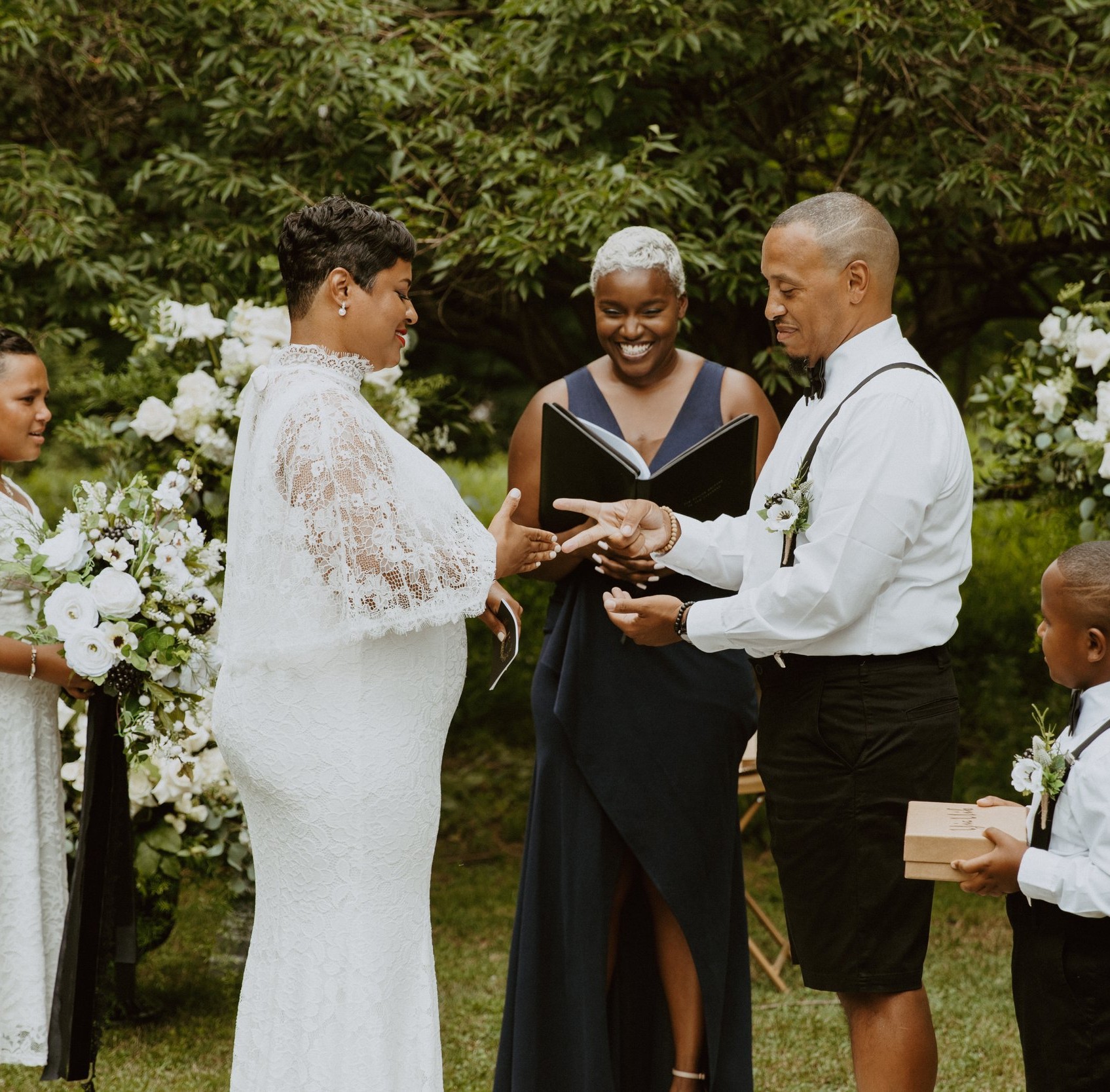
There is a statement I make quite often in my work: “I do not think marriage, as we currently understand and practise it, was designed for Africans”. I know how provocative that sounds and I also know that someone will immediately hear it as an attack on African culture, African families or African people, but that is not the intention because I am a proud African woman myself, but there is an uncomfortable arguement i will like to unravel in this article.
I think Africans have taken an institution that requires emotional vulnerability, psychological intimacy, sexual openness, honest communication, individual autonomy, mutuality and trust, and attempted to fit it into cultures that often socialise people in almost the opposite direction. Unfortunately, insteda of undertanding this underlining psychological issue, we blame the individuals when the marriage fails.
I have spent close to two decades working with individuals and couples. I have listened to husbands and wives in counselling rooms, answered questions from thousands of people online, received private messages from people who could not say certain things to their spouses but somehow found the courage to say them to a stranger on the internet. I have listened to people on radio, spoken about relationships on television, watched patterns repeat across generations, and interestingly, the more i practice, th emore the pattern become more noticeable.
Many of our marital problems are not simply marital problems, they are cultural problems entering a marriage. They are childhood problems entering adulthood, gender socialisation entering intimacy, religious beliefs entering the bedroom, family expectations entering the couple’s private space, and unresolved wounds wearing wedding clothes.
Marriage requires things we were not necessarily raised to practise
Think about what a psychologically healthy marriage actually requires. Vulnerability, honesty, emotional expression and sexual communication. It requires the ability to say, this hurts me, I am afraid, I don’t like this, I need more from you, I am not enjoying our sex life, I am struggling, I was wrong, I need help, or I don’t know what to do…. It requires two people who can look at each other and say: “Here is who I really am. Can you still love me?”. Unfortunately if you were raised in Africa, sttaements like this might be too heavy for you because African children are socialised differently. A boy learns very early that weakness is dangerous. Don’t cry, be a man, men don’t cry, don’t let anybody see you weak, you must be strong, you are the man of the house, you must provide or you must be in control.
Research on masculine norms across Africa has similarly identified restrictive emotionality, self-reliance and the suppression of vulnerability as important features of some dominant constructions of masculinity. Then this boy grows up, he becomes somebody’s husband, and his wife asks him to tell her how he feels, he was never trained for that level of expression. She says I need you to be emotionally present, he hears criticism. She says I don’t enjoy the way we have sex, he hears, you are not a real man. And suddenly, what looks like a communication problem is actually a developmental problem, because he was never taught the emotional language marriage requires.
We teach men to be invulnerable and then expect intimacy from them
This is one of the great contradictions of African masculinity. We want men to be emotionally strong, but we also want them to be emotionally available. We want them to lead, but we also want them to listen. We want them to be confident, but we also want them to admit when they are afraid. We want them to provide, but we also want them to disclose when they are financially overwhelmed. We want them to be sexually confident, but we do not teach them how to receive sexual feedback without experiencing it as humiliation. Imagine a man who has been taught that his sexual performance is evidence of his masculinity hearing his wife says she want the sex differently, that should ordinarily be a normal conversation among couples, but for a psychologically unprepared man, it can feel like an attack on his identity. And once sex becomes a test of masculinity, honest sexual communication becomes almost impossible.
A Nigerian study of married Ogu couples found that sexual negotiation was strongly connected with communication, and that frequent spousal communication was associated with greater gender equity in sexual negotiation. More recently, research among married millennial couples in Enugu found that cultural inhibition around explicit sexual discussion coexisted with secrecy, poorer sexual communication and marital conflict. In other words, we are asking people to have intimate marriages without teaching them how to have intimate conversations.
And then there is the woman
This is not only a male problem, African women are socialised too. Many girls learn that being a “good woman” means enduring. Don’t talk too much, don’t ask too many questions, don’t challenge your husband, don’t expose family problems, don’t talk about sex, don’t admit that you are dissatisfied, don’t tell people what happens in your marriage, and, perhaps most dangerously:Don’t leave.
So a woman may enter marriage without ever learning that she is allowed to have preferences. She may know how to perform the role of wife without knowing how to communicate as an equal partner, know how to cook, clean, care for children and accommodate a husband, but does she know how to negotiate? Does she know how to set boundaries, say no, ask for pleasure or simply say, “I am lonely inside this marriage”? Does she know that sexual dissatisfaction is information, not evidence of promiscuity?
We have sexualised ignorance and moralised knowledge
There is something particularly strange about our relationship with sex as Africans. We expect people to marry as virgins, or at least to appear sexually inexperienced, we discourage sexual conversations, sexual education and make sexual pleasure difficult to discuss. Yet, immediately after the wedding ceremony, we expect two people who may have almost never spoken honestly about sex to suddenly become sexually compatible. How? How exactly are two sexually inexperienced or sexually inhibited people supposed to magically know each other’s bodies? How does a woman communicate what gives her pleasure when she has been taught that a woman who knows too much about sex is “spoilt”? How does a man learn to touch, listen and respond when nobody taught him that female sexuality is not simply a button that you press? How do couples negotiate desire when talking about desire is considered shameful? And when the sex fails, we often search for moral explanations. She must have slept with someone else, he must be cheating, she is too demanding, he is not a real man, she has been watching pornography, he has been spiritually attacked, or someone has bewitched them… Anything except: “Perhaps neither of them was ever taught how intimacy works.”
We confuse secrecy with fidelity
This is another cultural contradiction. We often place enormous value on appearances. The marriage must look intact, family must look intact, husband must look successful, wife must look respectable, and children must look well behaved. We show up this nearly perfect appearnces while dying inside, in the name of what will people say? And therefore, people learn to hide. We hide debt, affairs, sexual dissatisfaction, pornography use, addiction, depression, resentment, loneliness and the fact that we have stopped loving each other. Sometimes we even hide violence.
Nigeria’s 2024 Demographic and Health Survey reported that 23% of women who had ever been married or had an intimate partner had experienced physical, sexual or emotional violence by their current or most recent partner; 58% of women who had experienced physical or sexual violence reported neither seeking help nor telling anyone. This is not simply a relationship problem, it is a silence problem. A culture of silence.
We marry families, not just individuals
Traditional African marriage systems were never simply about two individuals falling in love and deciding to build a private life together. Marriage historically served larger social purposes. It connected families, preserved lineage, created alliances, organised property, secured labour, produced children, strengthened kinship networks, and created social stability. As much as some of these communal values are among the beautiful things Africa has to offer the world, the purpose of marriage has changed faster than our marital psychology has changed.
Today, we increasingly expect marriage to provide companionship, emotional intimacy, sexual fulfilment, friendship, psychological safety, individual growth, romance, personal meaning, co-parenting, financial partnership, lifelong sexual monogamy and emotional exclusivity. This is an enormous psychological workload for one relationship, yet we continue to prepare people primarily for the wedding owanbe ceremony. We teach them how to get married, without adequately teaching them how to be married.
We have imported the structure without importing the psychology
This, to me, is the heart of the problem. Modern African marriage is a fascinating hybrid. We have taken elements of Western romantic marriage while retaining elements of traditional African marriage. We have added religious expectations, social media, capitalism and financial pressure. We have added modern female education and economic independence, changing ideas about gender, sexual liberation through the internet and individualism, yet we have not necessarily developed a coherent psychological framework for putting all these things together. So we are asking people to live a modern marriage with traditional emotional equipment. And then we are surprised when the system starts breaking down.
Even monogamy itself deserves a conversation
Many African societies historically had marital structures that were not identical to contemporary Western-style monogamy. Polygyny, for example, remains culturally significant in several African societies. Research across sub-Saharan Africa has documented substantial prevalence of polygynous unions, alongside complex effects on power, sexuality, jealousy, health and wellbeing.
In northern Nigeria, contemporary research continues to document how male authority, indirect sexual communication, jealousy, sexual-health negotiation and mismatched sexual appetites operate within polygynous marriages. So perhaps the question is not simply wether monogamy is good or bad, it is about the relationship structure that two psychologically mature adults can honestly and ethically sustain. For some people, that will be monogamy, for others, cultural or religious traditions may shape different arrangements. Some adults may even explore consensual non-monogamy, ut whatever the structure is, it cannot be healthy if it depends on deception, coercion, entitlement or silence.
Consent, honesty, negotiation and psychological safety remain necessary, because the problem is not necessarily that people choose different relationship structures. The problem is when people enter a structure they cannot honestly sustain, and then use culture to prevent honest conversations about it.
And then there is money
African marriage can sometimes become an economic institution before it becomes an emotional one. People marry because they think they are getting old, because of what people will say, their parents have found somebody, the man is wealthy, she comes from a good family, the family is respectable, this person can take care of me, we have been dating for too long, everyone is getting married, I need children, and sometimes: “I love this person” never becomes the most important reason.
Research on African marriage has repeatedly shown that marriage cannot be understood only as a private romantic arrangement; kinship, economics, gender roles and broader social structures profoundly influence union formation and stability. Studies of marital dissolution in sub-Saharan Africa have specifically examined the role of extended family structures and other institutional forces in marital outcomes.
So two people can stand at an altar and make vows that sound deeply romantic while the actual marriage is carrying the expectations of two families, four parents, ten aunties, religious institutions, economic pressures and an entire community. Sometimes there are more people inside the marriage than the two people who got married.
And children are watching
This may be the most psychologically important part of the entire conversation. Children do not learn relationships primarily from lectures, they learn them through observation. They watch how Daddy speaks to Mummy and watch whether Mummy is allowed to disagree. They watch whether Daddy apologises, whether affection is expressed, whether conflict is resolved or avoided, whether sex is treated as shameful, whether emotions are welcomed or ridiculed, whether women endure, whether men dominate, and whether people lie to preserve appearances.
And then they grow up. A little boy who watches his father emotionally disappear may learn that men do not communicate. A little girl who watches her mother silently endure may learn that love means suffering, a boy who watches his father control everything may learn that control is masculinity, and a girl who watches her mother suppress her sexuality may learn that female desire is dangerous. Then these children become adults, and reproduce what they witnessed, not because they are bad people, but because human beings learn relationships relationally. This is how dysfunction becomes intergenerational.
Perhaps marriage is not the problem. Our preparation for marriage is.
This is where I’m driving at, perhap, it wasnt necessaritly that marriage was not designed for Africans, but that, the marriage we are trying to practise requires psychological capacities that our culture has not consistently prepared us to develop. And this is a very different problem, because it means we can change it. We do not have to abandon African culture, but we have to examine it. We need to ask what parts of our culture strengthen intimacy, community, responsibility, and commitment? What parts protect family? We must also ask what parts teach emotional suppression, what parts reinforce male entitlement? What parts silence women, sexualises ignorance, rewards deception, make divorce more shameful than abuse, make appearances more important than psychological safety, make a woman endure what we would never ask a man to endure and what parts make a man perform strength when what his family actually needs is emotional honesty?
The truth is taht culture is not sacred simply because it is old, and modernity is not automatically healthy simply because it is new.We must be willing to examine both.
We need an African psychology of marriage
We cannot simply import Western relationship theories and assume they will automatically fit African families, but neither can we romanticise traditional African marriage and pretend that everything about it was healthy. We need something more sophisticated, like an African psychology of marriage. One that understands collectivism without destroying individuality, respects family without allowing families to colonise marriages, honours masculinity without requiring emotional imprisonment, celebrates femininity without demanding female submission, respects sexuality without turning it into shame, values commitment without glorifying endurance, and recognises culture without allowing culture to become an excuse for dysfunction.
One that teaches our boys how to feel, our girls how to speak, our men how to listen, and our women how to negotiate. One that teaches couples how to fight without destroying each other, and spouses how to talk about money, sex, desire, disappointment and vulnerability. This is how intimacy is achieved, and perhaps this is why so many marriages are struggling. Not because Africans cannot love, or commit. Not because African families do not value marriage, because we often value marriage so much that people remain in devastating marriages simply to preserve the institution.
The deeper problem is that we have inherited a model of marriage that was designed to solve social, economic and reproductive problems, and we are now expecting it to solve psychological and emotional problems it was never originally designed to solve. We want companionship from a system built around obligation, vulnerability from people trained in stoicism, sexual intimacy from people taught that sex is shameful, honesty from people trained to preserve appearances, equality from gender systems historically organised around hierarchy, and emotionally secure children from emotionally unavailable parents. And then we call the resulting chaos marital problems, maybe a better definition should be a cultural adaptation problems.
And until we are brave enough to examine the culture beneath the marriage, we will keep treating the symptoms while reproducing the disease.
So, no, I am not saying Africans should stop getting married.
I am saying something much more radical: We need to stop getting married the way we were taught to get married. We need to stop preparing people for weddings and start preparing them for intimacy. We need to stop asking only: “Who are you marrying?” And start asking: “Who have you become, and are you psychologically equipped to build a life with another human being?” Because a wedding can join two people, but only psychological maturity can build a marriage. And if we want healthier African marriages, perhaps the revolution does not begin in the marriage, it begins in how we raise African boys and girls long before they ever meet the person they will marry.