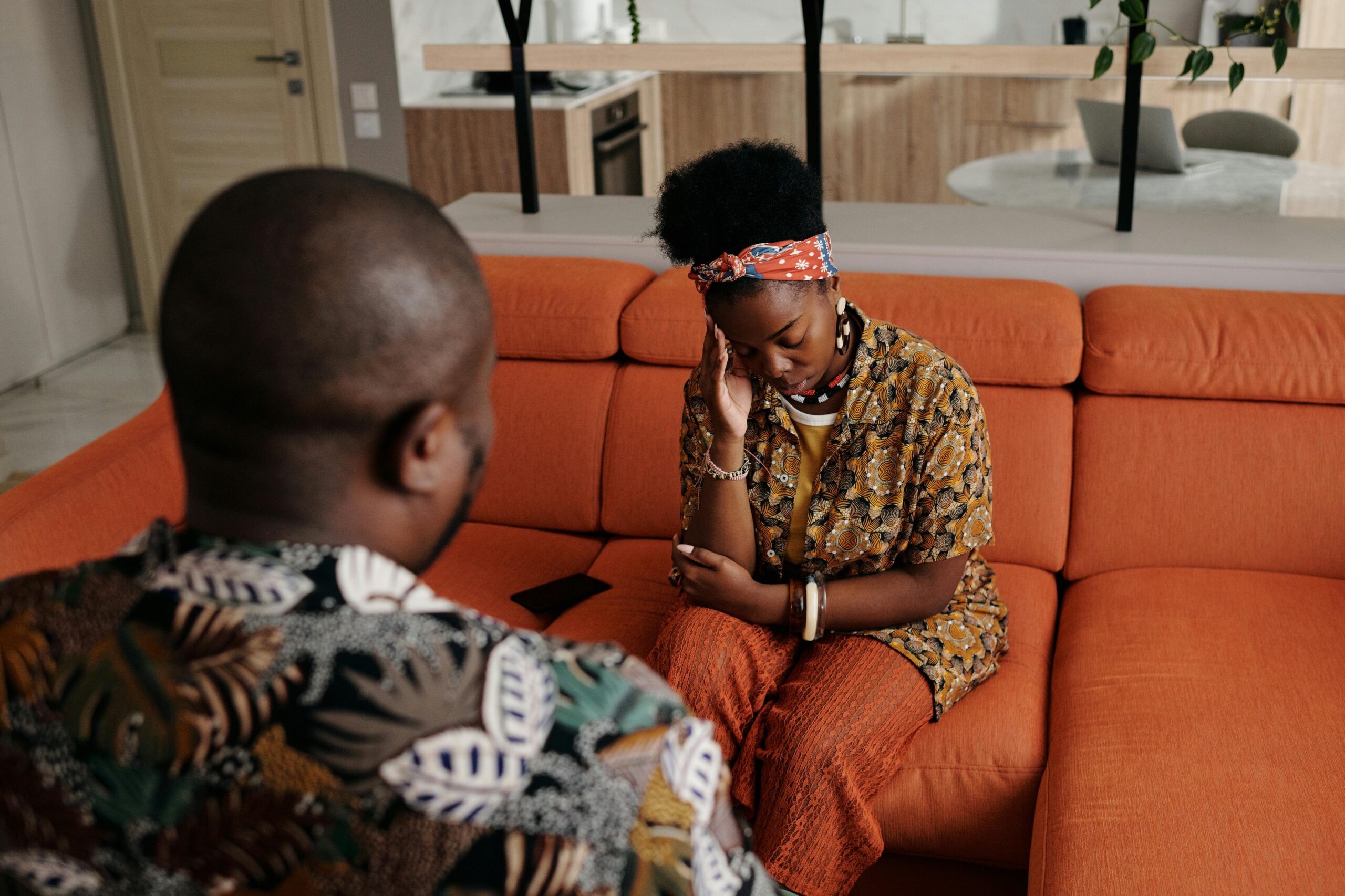

There is a kind of suffering that does not announce itself loudly, it does not begin with bruises or dramatic exits, but subtly in the body. A shift in sleep, a tightening in the chest, or, a constant, low hum of unease. Over time, what was once called love begins to feel like labor, and what was once excitement begins to feel like survival.
It is tempting to say, “the wrong partner will make you sick and ugly.” The phrasing is provocative, and for many, it feels true. But clinically, the reality is more precise and more sobering: it is not simply the partner, it is the chronic stress state the relationship creates, and the way the body is forced to adapt to it over time. And the body always adapts, until adaptation becomes deterioration.
The Relationship as a Regulator or a Threat
Human beings are not designed to regulate themselves in isolation, we are biologically wired for co-regulation. A safe, emotionally attuned partner does more than provide companionship, they help stabilize the nervous system leading to slow heart rate, deep breathing, and regulated cortisol level. The body simply enters a state where it can repair, restore, and expand.
But when a relationship becomes unpredictable, unsafe, emotionally inconsistent, or psychologically invalidating, that same system is disrupted. The partner, who should function as a source of safety, becomes a source of vigilance, the body does not debate this, it simply responds. And it responds by preparing for threat.
Chronic Stress and the Cortisol Story
At the center of this physiological shift is the stress-response system, particularly the hypothalamic–pituitary–adrenal (HPA) axis. In moments of acute stress, cortisol is released to help the body respond, a necessary and adaptive move by the body. But in relationships where stress is not occasional but continuous, where tension, anxiety, or emotional insecurity are persistent, cortisol remains elevated.
Over time, this creates what researchers refer to as allostatic load, the cumulative burden of chronic stress on the body (McEwen & Stellar, 1993), this is where the changes begin to show. Sleep becomes shallow or disrupted, even when the body is exhausted. Energy levels decline, not because of laziness, but because the system is overworked. The skin begins to reflect internal imbalance, dullness, inflammation, or breakouts. Hair may thin. Weight distribution may change, particularly with increased abdominal fat storage linked to prolonged cortisol exposure. These are not just cosmetic concerns, they are physiological signals and the body saying: this environment is not safe enough for me to thrive.
The Nervous System Keeps the Score
Trauma researcher Bessel van der Kolk famously wrote, “the body keeps the score.” Nowhere is this more evident than in chronically stressful relationships. The nervous system operates through two primary states relevant here: activation and regulation. When safety is perceived, the parasympathetic system supports rest, digestion, healing, and emotional openness. When threat is perceived, whether physical or emotional, the sympathetic system prepares the body for defense. In a dysregulating relationship, individuals often live in a prolonged state of sympathetic activation, which does not always look dramatic, but sometimes looks like:
- A constant mental rehearsal of conversations that have not yet happened.
- Anxiety triggered by tone, silence, or delayed responses.
- The need to over-explain, overcompensate, or over-function.
- A quiet shrinking of self to avoid conflict.
Over time, this state becomes internalized. What began as a response to the relationship becomes a baseline mode of being, and eventually, the system begins to exhaust itself.
The Slow Erosion of Self
One of the most damaging aspects of chronic relational stress is not just what it does to the body, but what it does to identity. In relationships marked by inconsistency, emotional neglect, control, or subtle invalidation, individuals often begin to adjust themselves to maintain connection. They speak less, tolerate more, question their own perceptions and normalize what once felt unacceptable. This is not weakness, it is adaptation, but adaptation has a cost.
Over time, individuals report feeling disconnected from themselves, unsure of their preferences, their voice, their emotional truth. This “loss of self” is not abstract. It is tied to measurable psychological strain, including increased anxiety, depressive symptoms, and reduced self-esteem (Mikulincer & Shaver, 2016). The tragedy is that many remain in this state, believing the issue is personal inadequacy rather than relational misalignment.
When the Body Begins to Reflect the Relationship
There is a reason people often say, “you don’t look like yourself anymore.”What they are witnessing is not simply aging or stress from life in general. They are witnessing physiological dysregulation made visible. Chronic relational stress affects hormonal balance, sleep quality, immune function, and even cellular aging. Research has shown that prolonged stress can accelerate biological aging markers, including telomere shortening (Epel et al., 2004).
The “glow” people refer to, the vitality, the presence, the aliveness, is not superficial. It is the external expression of an internally regulated system. When that system is under constant strain, the body conserves energy, it shifts from thriving to surviving. And survival is not radiant. It is functional.
The Danger of Normalization
Perhaps the most insidious aspect of unhealthy relationships is not the stress itself, but how easily it becomes normalized. Humans have a remarkable ability to adapt to repeated experiences. Emotional neglect becomes “just how they are.” Inconsistency becomes “something to manage.” Anxiety becomes “part of love.” But normalization in the mind does not equal safety in the body, the body continues to register the mismatch, it continues to activate stress responses and carry the burden. eventually, it begins to express it, in fatigue, irritability, illness, disconnection, or visible decline.
A Clinical Question, Not a Romantic One
At a certain point, the question in a relationship must move beyond emotion and into physiology. Not: Do I love this person?
But: What is this relationship doing to my nervous system over time? Does it allow for rest, support regulation, create safety, or does it demand constant adaptation? These are not abstract considerations. They are central to long-term health.
The Deeper Truth
There’s currently a viral post by a neurologist arguing that “the body does not keep the score,” insisting that trauma is stored in the brain, not the body. But that argument feels more like clickbait than science, because even if trauma is processed and encoded through the brain, it still does not cancel out the profound connection between the brain and the body. The brain does not exist floating in isolation from the nervous system, immune system, hormonal system, cardiovascular system, or the body’s stress responses. What affects the brain inevitably affects the body.
This is exactly why chronic emotional stress can show up physically: high blood pressure, insomnia, chronic fatigue, panic responses, mood instability, digestive issues, weakened immunity, emotional exhaustion, and even accelerated aging. So whether we say “the body keeps the score” or “the brain stores trauma,” the conclusion remains the same: Human beings carry emotional pain biologically.And one of the most dangerous sources of chronic biological stress is an unhealthy relationship.
I have sat in therapy sessions with women suddenly battling serious health issues, men struggling with blood pressure problems that seemed to appear overnight, and people dealing with depression, mood swings, insomnia, and emotional breakdowns that looked “sudden.” But when you look deeper, many of these people have spent years in relationships that completely damaged their minds and dysregulated their nervous systems. Most people don’t realize that the wrong relationship doesn’t just break your heart; it can slowly break down your body too. You call it love, but your body experiences it as stress.
It is therefore, profoundly accurate to say that a chronically dysregulating relationship can pull the body out of balance, and the body will eventually reflect that imbalance. Not as punishment or weakness, but as biology. The body does not lie, it only reveals what the mind has learned to endure.
References
Epel, E. S., Blackburn, E. H., Lin, J., et al. (2004). Accelerated telomere shortening in response to life stress. Proceedings of the National Academy of Sciences, 101(49), 17312–17315.
McEwen, B. S., & Stellar, E. (1993). Stress and the individual: Mechanisms leading to disease. Archives of Internal Medicine, 153(18), 2093–2101.
Mikulincer, M., & Shaver, P. R. (2016). Attachment in Adulthood: Structure, Dynamics, and Change. Guilford Press.
van der Kolk, B. A. (2014). The Body Keeps the Score: Brain, Mind, and Body in the Healing of Trauma. Penguin Books.